Halloween face paint is the fastest, cheapest way to finish a costume: a white base, a few well-placed lines, and a steady hand can turn an ordinary outfit into a skeleton, a witch, or a wicked clown in under fifteen minutes. This guide walks you through the paint to buy, the safety rules that actually matter, and eight beginner-friendly looks you can copy step by step for Halloween 2026, whether you are painting a wiggly four-year-old or going all out for a costume party.
There are two kinds of paint worth considering, and the choice is simpler than the shelf at the craft store makes it look. Water-activated paint is the default for almost everyone: you wet a brush or sponge, swirl it on the cake until it lifts a creamy layer, and apply. It dries fast, layers cleanly, and washes off with soap and water, which is exactly what you want on a child who will be done with the whole idea by 8 p.m. Oil-based (greasepaint) lasts longer and shrugs off sweat, so it suits adults committed to an all-night look, but it takes makeup remover or cleansing oil to get off.
2Women's Monster Onesie – soft green head-to-toe base for a Frankenstein or friendly-monster face.
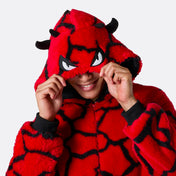
3Women's Devil Onesie – the obvious match for painted-on red horns and smoky eyes.
4Women's Unicorn Onesie – pastel base for a glittery, not-scary face for the under-tens.
Whatever you pick, buy something labelled cosmetic-grade and made for skin. Acrylic, tempera, and craft paints are not face paint: they are not formulated for skin and can cause irritation or worse, so they stay on the table. Trusted face-paint brands include Snazaroo, Mehron, and Fusion Body Art, and a small starter palette plus one or two crayons covers every look below. If you are dressing the whole family, our range of Halloween costumes gives the paint a base to build on, and a soft Halloween onesie works as a one-piece skeleton or monster body in seconds.
Creep it cute
Kids' Devil Onesie
Whether you're handing out candy or hunting for it, Kids' Devil Onesie brings the spooky fun.
Face painting should be the fun part of the night, not the reason someone is itching by midnight. A few habits keep it that way:
Patch test new paint. Dab a little on the inside of the elbow and wait 30 to 60 minutes before painting the face. If the skin reacts, stop.
Mind the very young. Many brands advise against painting children under three, whose skin is still developing. For little ones, keep designs simple, use light colors, and stay clear of the eyes so removal is tear-free.
Never double-dip a dirty brush. Wash brushes and sponges between people to avoid spreading anything, and skip homemade recipes with toothpaste, cornstarch, or food coloring, none of which are made for faces.
Less is more. Thin layers dry faster and smudge less. Build coverage up gradually instead of loading the brush.
Once the paint is dry, build the rest of the outfit around it with our kids' Halloween costumes so the whole look hangs together from head to toe.
Four easy looks for kids
Children want to be the character, not sit still for an hour, so these designs are built for speed. Each one uses three colors or fewer.
Spider and web
The classic linebuster. Sponge a light base around one eye, then use a thin brush and black paint to draw a few curved web strands radiating from the corner of the eye, joined by connecting arcs. Add one small spider on the cheek. Done in three minutes, and it pairs with almost any costume.
Friendly tiger
Three colors do the work: orange, white, and black. Sponge orange over the cheeks and forehead, leave a white muzzle and brow, then add black stripes, a nose, and whiskers with a crayon. Cute enough for toddlers, striking enough for older kids.
Little pumpkin
For a subtle look that survives a school day, paint a single small orange jack-o-lantern on one cheek with a green stalk and a black grin. Pair it with an orange top and you have a costume with zero fuss.
Pint-sized vampire
Start with a pale base, blend a little black with pink or purple under the eyes for tired hollows, then draw two fangs at the corners of the mouth with a black crayon and fill the tips white. Add a cape and the transformation is complete.
Four looks for teens and adults
Older painters can handle more detail and longer wear, so this is where the wow factor lives. Apply paint to every bit of exposed skin, including neck and hands, so the look reads as deliberate.
Half skull
One of the most-searched looks for a reason. Paint half the face with a white base, then black out one eye socket, shade the cheek hollow, and draw vertical "teeth" lines across the lips on the painted side only. Leaving the other half as your normal face makes it pop, and it photographs beautifully.
Wicked witch
Sponge a green base, frame the eyes with thick black liner sweeping up over the brow, and add orange-red shadow on the lids edged in dark purple. A few yellowed teeth with a touch of tooth paint sell the cackle.
Sugar skull (Catrina)
Worth knowing the distinction: the sugar skull, or Catrina, belongs to Day of the Dead on November 1 and 2, not Halloween itself, though the holidays sit side by side. Start with a white base, ring the eyes with black petals, add a small web of dots and lines, and finish with bright flowers. Intricate but forgiving, since symmetry can be loose.
Pennywise-style clown
A white base, a wide red mouth painted past the lips, red accents climbing from the corners of the eyes, and a smudge of black for menace. Add a red wig and you have the scariest five-minute look on this list.
How to apply it (and take it off)
Prep the skin first: wipe away makeup, lotion, and sweat so the paint grips and nothing reacts underneath. Work from the base outward. Sponge on solid color first, let it set, then add line work on top with a slightly damp brush that is not dripping. For shading and 3D effects, blend a darker tone into the edges of your base.
Removal is where a good night turns sour if you rush it. For water-based paint, rub a soft sponge or cloth with liquid soap over the design in small circles, then rinse with clean water away from the eyes. Repeat if color lingers, and for any faint stain, a dab of skin-safe oil left on for a few minutes lifts the rest. Moisturize afterward, since soap and scrubbing leave skin dry. The gentler the removal, the more likely a child will say yes to face paint again next year. Halloween itself traces back to the ancient Celtic festival of Samhain, when people wore disguises to ward off wandering spirits, so a painted face is one of the oldest costume traditions there is.
Quick tips for a smoother night
Tie hair back and lay out an old towel before you start.
Keep a damp cloth nearby for quick fixes and the inevitable nose itch.
Stencils and one-stroke split cakes speed up repeat designs if you are painting a whole party.
Practice the look once on your own arm before painting a face.
Halloween face paint
Two main paint types: water-activated (washes off with soap and water) and oil-based greasepaint (lasts longer, needs makeup remover)
Patch test new paint on the inside of the elbow and wait 30 to 60 minutes before painting the face
Many brands advise against painting children under 3, whose skin is still developing
Most easy looks use 3 colors or fewer and take under 15 minutes
Sugar skull (Catrina) face paint belongs to Day of the Dead on November 1 and 2, not Halloween
Trusted cosmetic-grade brands include Snazaroo, Mehron, and Fusion Body Art
Frequently asked questions about Halloween Face Paint: 8 Easy Looks & Tips 2026
For most people, a water-activated, cosmetic-grade paint from a trusted brand like Snazaroo, Mehron, or Fusion Body Art is the best choice. It goes on easily, dries fast, layers cleanly, and washes off with soap and water, which makes it ideal for kids. Adults who want an all-night look that resists sweat can choose oil-based greasepaint instead, accepting that it takes makeup remover to get off.
Start with a clean, dry face, then sponge on a solid base color and let it set. Add line work on top with a slightly damp brush, building thin layers rather than loading on paint. Stick to designs that use three colors or fewer, like a spiderweb around one eye, a small pumpkin on the cheek, or a half skull. Practice once on your own arm first.
Only paint labelled cosmetic-grade and intended for use on skin. Water-activated face paints are the safest, gentlest option for all ages. Never use acrylic, tempera, or craft paint, and avoid homemade recipes with toothpaste, cornstarch, or food coloring, none of which are formulated for faces and can cause irritation or chemical burns.
A small water-activated starter palette plus one or two face-paint crayons covers almost every beginner look. Water-based paint is forgiving, dries quickly, and wipes off easily if you make a mistake. Begin with simple, low-detail designs such as a tiger, a spiderweb, or a single pumpkin before working up to skulls and full-face character looks.
Yes, slightly. Dampen the sponge, then press it onto the paint cake in small circles until a creamy layer lifts, and pat it onto the skin for an even base. The sponge should be damp, not dripping, or the paint will run. Use a slightly moist brush for line work on top once the base has set.
For water-based paint, rub a soft sponge or cloth with liquid soap over the design in small circles, then rinse with clean water, keeping soap away from the eyes. Repeat if color remains. For a stubborn faint stain, dab on skin-safe oil, leave it a few minutes, and wash again. Moisturize afterward, since soap and scrubbing dry the skin.