The history of Halloween stretches back more than 2,000 years to the ancient Celtic festival of Samhain, a harvest celebration that marked the end of summer and the night when people believed the dead returned to walk the Earth. Over the centuries it blended with Christian holy days, crossed the Atlantic with Irish and Scottish immigrants, and grew into the candy-and-costume holiday we know today. Here is how each piece of October 31 came to be.
Long before pumpkins and trick-or-treating, the Celts of Ireland, Scotland, and northern France marked the turn of the year with the festival of Samhain (pronounced "SAH-win"), held from sunset on October 31 through November 1. It was the end of the harvest and the start of the dark, cold half of the year, a season the Celts strongly associated with death.
On this one night, people believed the boundary between the living and the dead grew thin, allowing spirits to cross back into the world. To welcome the harvest, honor their ancestors, and confuse any unfriendly souls wandering the night, they lit huge bonfires and put on costumes. Families also left out food and drink as offerings for their deceased loved ones, an early ancestor of the treats children collect today.
Easy costume bases rooted in Halloween's spooky past
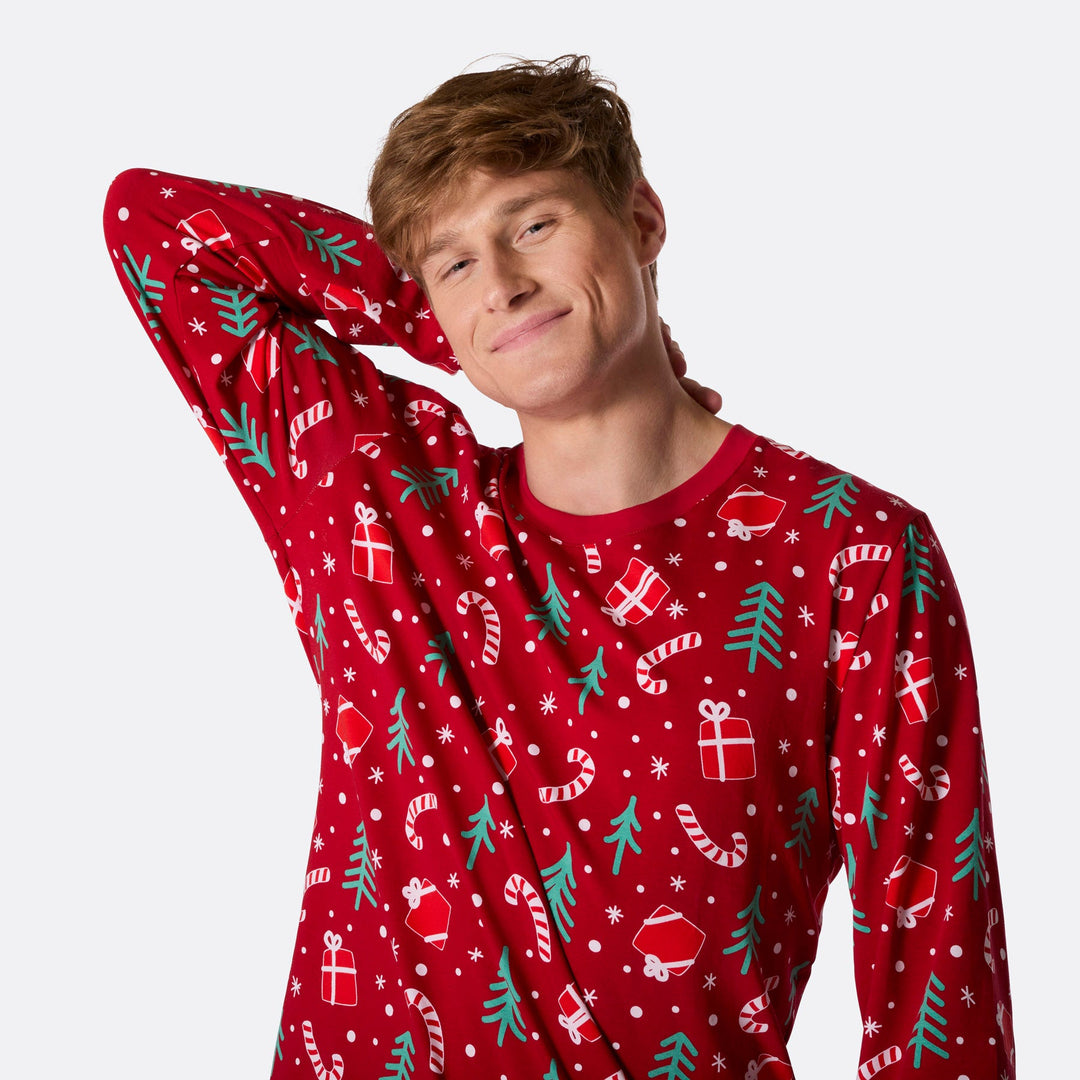
1Kids' Skeleton Halloween Onesie – skeletons nod straight back to Samhain's theme of death; add white face paint for an instant classic.
2Women's Monster Onesie – a one-piece monster look that channels the creatures Celts dressed up to confuse.
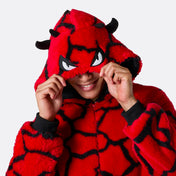
3Men's Devil Onesie – horns and tail included, a nod to the Devil who haunts the Stingy Jack legend.
4Women's Alien Onesie – a modern twist on the costume tradition, finished with silver face paint and antennae.
5Kids' Devil Onesie – a warm, hooded disguise for trick-or-treating that survives a long night outdoors.
How the church reshaped the calendar
As the Roman Empire and later Christianity spread across Celtic lands, the old festival was gradually folded into the church calendar. In the eighth century, Pope Gregory III designated November 1 as All Saints' Day, a time to honor all the saints, and it absorbed many of the customs of Samhain. According to the long history recorded by encyclopedic sources, the evening before became known as All Hallows' Eve, and over time that name was shortened to Halloween. A day later, on November 2, All Souls' Day kept alive the idea of the living reaching out to the dead at this point in the year.
Trick-or-treat ready
Men's Grey Teddy Bear Onesie
Step into Men's Grey Teddy Bear Onesie and own the spookiest night of the year in total comfort.
Even older Roman customs found their way in. When the Romans conquered the British Isles in 43 AD, their autumn festival honoring Pomona, the goddess of fruit and abundance, blended with the similarly timed Samhain. That mash-up is why apples, sacred to Pomona, became part of the holiday at all.
Jack-o'-lanterns began in Ireland, carved from turnips rather than pumpkins. The legend tells of Stingy Jack, who tricked the Devil and was barred from both Heaven and Hell, doomed to wander with only a glowing coal inside a hollowed turnip. Locals carved scary faces of their own to frighten his restless spirit away.
Costumes trace straight back to Samhain, when the Celts wore disguises so wandering spirits would mistake them for fellow ghosts and leave them in peace.
Black cats earned their spooky reputation in the Middle Ages, when they were seen as a symbol of the Devil and, later, as a witch's "familiar" helping to work dark magic.
The colors black and orange also come from Samhain: black for the "death" of summer, orange for the warm tones of the autumn harvest.
Bobbing for apples began as a Roman courting ritual tied to Pomona, in which young people tried to predict their romantic futures through the game.
Bats joined the cast almost by accident. Samhain bonfires drew insects, the insects drew bats, and the eerie creatures became linked with the festival, with medieval folklore casting them as omens of death.
If you are putting together a look for a young trick-or-treater this year, our kids' Halloween costume collection brings the holiday's spooky roots to life with comfortable, warm options built for a long night out.
The many theories behind trick-or-treating
No single custom captures Halloween like trick-or-treating, and historians point to at least three overlapping origins. The first goes back to Samhain itself, when people left food out to appease the spirits, then began dressing as those spirits to receive offerings in turn. The second is the medieval practice of "souling" and the Scottish tradition of "guising," in which children and poor adults went door to door collecting food or money in exchange for prayers, and later for songs, jokes, and tricks. A third theory traces it to "belsnickeling," a German-American Christmas custom where costumed children visited neighbors who tried to guess their identities, with a treat as the reward.
However it started, the costume is still the heart of the night. If you want a ready silhouette to build on, our Halloween costume range covers classic spooky looks for the whole family, while a cosy Halloween onesie doubles as both a quick disguise and warm pajamas for a cold night of knocking on doors.
How Halloween crossed the Atlantic
Halloween was slow to take hold in America. The early colonists were largely Puritans who frowned on the holiday, so for a long time it barely registered. That changed in the nineteenth century, when waves of Irish and Scottish immigrants brought their autumn customs with them, including the belief in a night when spirits might walk the Earth. In the New World, All Hallows' Eve became a time for "play parties," private harvest gatherings where people wore costumes, told fortunes, and shared scary stories.
The pumpkin, native to America and far easier to carve than a turnip, quickly took over the jack-o'-lantern role. Anthropology professor Chris DeCorse credits Washington Irving's 1820 story "The Legend of Sleepy Hollow," in which a headless horseman hurls a pumpkin at the hapless Ichabod Crane, with cementing the pumpkin as a symbol of the spooky season.
From mayhem to a family-friendly holiday
For much of the late nineteenth and early twentieth centuries, Halloween in America was less about candy and more about chaos. The phrase "trick or treat" was meant literally: a household that offered no treat might find its windows soaped, its trees draped in toilet paper, or worse. Pranking, sometimes called "Devil's Night" or "Mischief Night," was the main event for young people letting off steam.
The shift toward today's child-centered holiday came in the middle of the twentieth century, driven partly by efforts to curb vandalism and, above all, by the postwar move to the suburbs. As families spread into new neighborhoods after World War II, communities worked to turn Halloween into a safe celebration for children. Candy makers seized the moment, marketing small individually wrapped sweets for trick-or-treating. Before then, children were just as likely to receive coins, nuts, fruit, or small toys at the door. Wrapped candy did not fully take over until the 1970s, when parents grew wary of anything unwrapped.
The sweet history of Halloween candy
Some of the season's most familiar treats have surprisingly precise origin stories. Candy corn was first made by the Wunderle Candy Company in Philadelphia in the 1880s and was originally called "Chicken Feed," sold under the slogan "Something worth crowing for," before the Goelitz Company brought it to the masses in 1898. Candy apples were invented by accident in 1908, when Newark candymaker William W. Kolb dipped apples in red cinnamon glaze for a Christmas window display and found customers wanted the fruit instead of the candy. Both became Halloween staples as trick-or-treating boomed across the United States in the 1950s. Today candy reigns, but as you can see, even the sweets carry echoes of harvest festivals thousands of years old.
So why do we celebrate Halloween today?
Modern Halloween is a layered holiday: an ancient Celtic harvest festival, a Christian observance of the dead, a folk tradition carried across the ocean, and a commercial celebration shaped by twentieth-century America. We carve pumpkins because of an Irish legend, wear costumes because the Celts wanted to fool spirits, and ring doorbells for candy because of customs that are part Samhain offering, part medieval souling. What ties it all together is our enduring fascination with being a little bit scared, and the simple joy of dressing up and gathering with neighbors as the dark season begins.
Halloween history at a glance
Halloween traces back more than 2,000 years to the Celtic festival of Samhain, held October 31 to November 1.
In the 8th century, Pope Gregory III set November 1 as All Saints' Day, making the evening before All Hallows' Eve.
The Romans conquered the British Isles in 43 AD, blending their Pomona harvest festival into Samhain.
Jack-o'-lanterns were originally carved from turnips in Ireland, not pumpkins.
Washington Irving's 1820 story 'The Legend of Sleepy Hollow' helped make the pumpkin a Halloween symbol.
Candy corn was first made in the 1880s and was originally called 'Chicken Feed.'
Candy apples were invented by accident in 1908 by Newark candymaker William W. Kolb.
Individually wrapped candy took over trick-or-treating in the 1950s and dominated by the 1970s.
Frequently asked questions about The History of Halloween: Origins & Traditions
Halloween grew out of the ancient Celtic festival of Samhain, held from October 31 to November 1 to mark the end of the harvest and the start of winter. The Celts believed spirits of the dead returned on this night, so they lit bonfires and wore costumes to ward them off. The festival later merged with the Christian holy days of All Saints' Day and All Souls' Day, and the evening before All Saints' Day, All Hallows' Eve, eventually became known as Halloween.
October 31 was the date of the Celtic festival of Samhain, the turning point between the harvest season and winter. In the eighth century, Pope Gregory III set November 1 as All Saints' Day, so the night before became All Hallows' Eve. The date stuck, and over time that evening turned into the Halloween we celebrate today.
It is genuinely both. Halloween's oldest roots are in the pagan Celtic festival of Samhain, but it took its modern name and timing from the Christian observances of All Saints' Day and All Souls' Day. The holiday as we know it is a blend of pre-Christian harvest customs and later church traditions, shaped further by American culture over the past two centuries.
Historians point to three overlapping origins. Celts left out food to appease wandering spirits during Samhain; medieval 'souling' and Scottish 'guising' saw people go door to door for food or money in exchange for prayers, songs, and tricks; and the German-American 'belsnickeling' custom had costumed children visit neighbors who guessed their identities for a treat. Modern American trick-or-treating draws on all three.
The jack-o'-lantern began in Ireland, where people carved scary faces into turnips, inspired by the legend of Stingy Jack, who was barred from both Heaven and Hell and wandered with a glowing coal in a hollowed turnip. When the custom reached America, immigrants found that native pumpkins were larger and far easier to carve, so the pumpkin became the Halloween icon we know.
Halloween was slow to catch on because early Puritan colonists disapproved of it. It spread in the nineteenth century with Irish and Scottish immigrants and became a child-friendly, candy-focused holiday in the mid-twentieth century, especially after World War II, when families moved to the suburbs and candy makers began selling individually wrapped sweets for trick-or-treating.