Knitting for beginners comes down to four skills you can learn in an afternoon: the slip knot, the cast on, the knit stitch, and the cast off. Master those and you are officially a knitter. Everything else, purling, shaping, sweaters, is just a variation on what you already know. This guide walks you through the supplies, the four core skills, the easiest first projects, and the rookie mistakes so you can pick up needles today and have something to show for it by the weekend.
What you need to start (it is shorter than you think)
You need exactly two things to knit: needles and yarn. That is it. Skip the fancy kits for now. Here is what experienced teachers actually hand a first-timer:
Yarn: a medium (worsted) or chunky weight in a light, solid color. Thicker yarn is easier to see and grip, and a pale color lets you actually read your stitches. Cheap acrylic is perfect to learn on, so a mistake never feels precious.
Needles: a US size 8 (5mm) pair to match worsted yarn, going up a size if you knit tightly. Choose wood or bamboo over metal, the slight surface drag holds the yarn instead of letting stitches slide off.
Two extras: a pair of small scissors and a blunt yarn needle to weave in the tail at the end.
Best first projects for a brand-new knitter
1A garter-stitch dishcloth – the lowest-stakes start there is. Small, square, done in an evening, and you only need the knit stitch.
2A simple scarf – no shaping, just line after line of the same stitch. It builds real muscle memory and you end up with something you will actually wear.
3A beginner hat – a popular next step. It is faster and more interesting than a long scarf and introduces gentle shaping when you are ready.
4A chunky blanket – essentially a very wide scarf. Big yarn and big needles mean it grows quickly and stays motivating.
Always check the yarn label for its recommended needle size and follow it while you are starting out. Going up or down a half millimeter is fine, much more and your fabric ends up too tight or too loose.
The four skills that make a knitter
Almost every beginner guide agrees on the same four steps. Learn them in this order and do not move on until each one feels steady.
The slip knot. A simple loop that anchors your very first stitch on the needle. It is not technically a cast-on stitch, but nothing happens without it.
The cast on. Turning loose yarn into a row of neat stitches on the needle. The long-tail cast on is the standard starting point, leave a generous tail before you begin.
The knit stitch. The heartbeat of the whole craft. Needle in, wrap the yarn, pull a new loop through, slide the old stitch off. Repeat to the end of the row, turn your work around, and go again.
The cast off (bind off). Locking the stitches so your finished piece can leave the needles without unraveling. Knit two, lift the first over the second, repeat to the end.
Snuggle-season staple
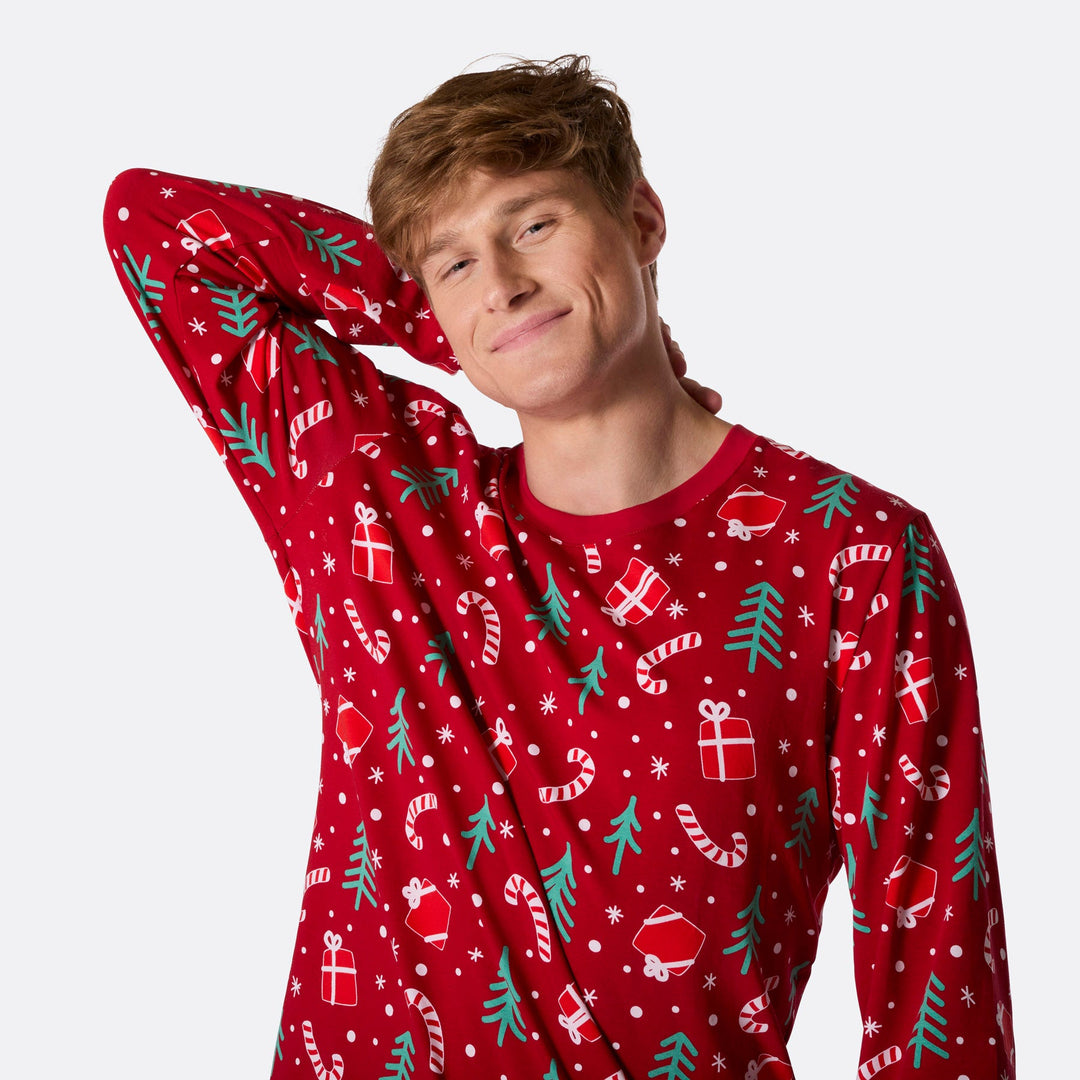
Men's Christmas Scenery Christmas Sweater
From the tree-trimming to the family photo, Men's Christmas Scenery Christmas Sweater turns up the holiday charm.
That is the entire backbone. When people say knitting is hard, what they usually mean is that it is new. Like learning to drive, your hands feel clumsy for the first hour, then muscle memory takes over and you stop thinking about it.
Knit vs purl, and the two main holds
Once the knit stitch feels natural, the purl stitch is its mirror image, and together they unlock almost everything. Every stitch knitted gives you bumpy, stretchy garter stitch. Alternating a knit row with a purl row gives you smooth stockinette, the classic V-patterned fabric you see on store-bought sweaters. If purling feels like too much on day one, skip it, you can knit a perfectly good first project with the knit stitch alone.
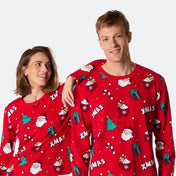
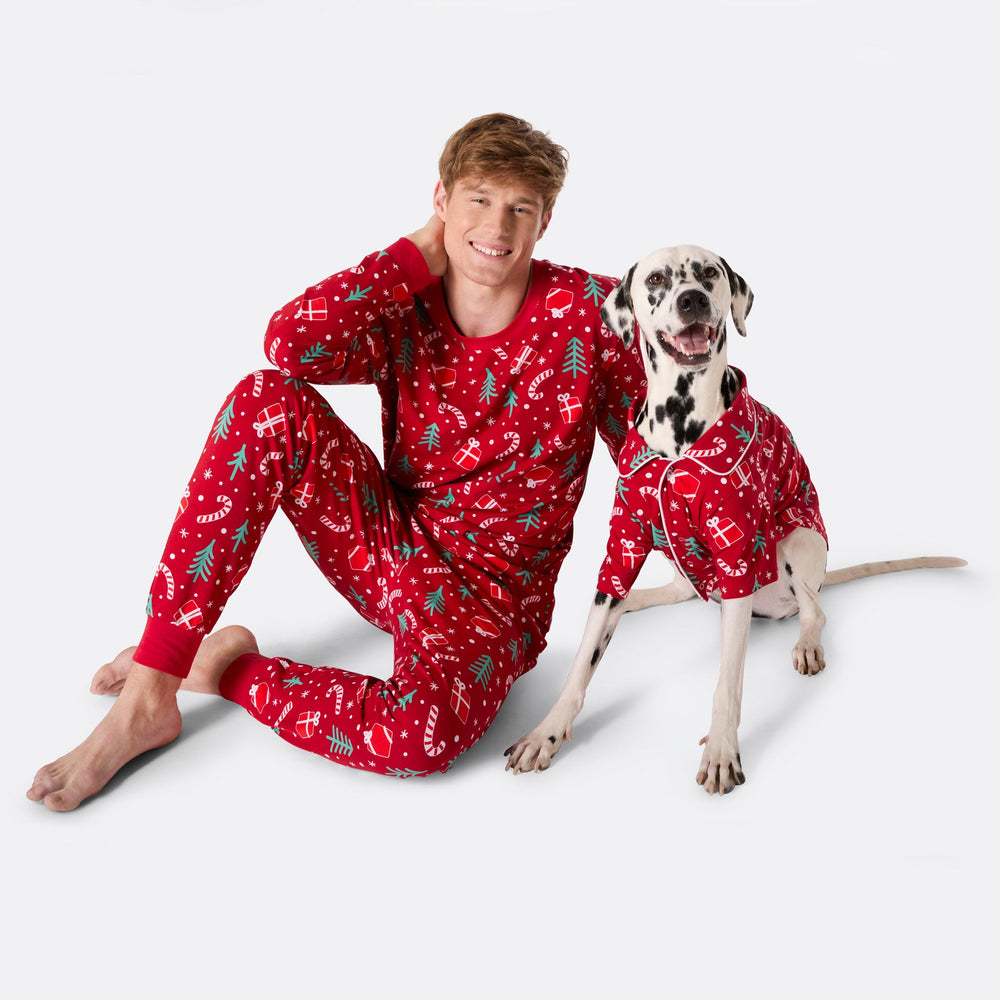
Want everyone in the same look for the photo? A set of matching family Christmas sweaters gives you the coordinated, knitted feel without a single cast-on, so your real knitting time stays low-pressure and fun.
You will also meet two ways to hold the working yarn: English style (yarn in the right hand) and Continental (yarn in the left). Neither is better, righties often find English natural and lefties often prefer Continental, so try both and keep whichever feels less awkward.
Your first projects, in the right order
Pick a project that is forgiving and finishes fast, so you get the reward of a finished object before frustration sets in. The experts on the current top guides nearly all point to the same starters:
Notice the pattern: rectangles. As one knitting designer puts it, so many things can be made from rectangles, so leaving your scarf days behind is far less tricky than it looks. Work a free beginner pattern rather than freestyling, it tells you exactly how many stitches to cast on and keeps your edges honest.
The mistakes every beginner makes (and how to fix them)
You will make these. Everyone does, and none of them mean you are bad at knitting:
Dropped stitches: a stitch slips off the needle and leaves a little ladder. Do not panic, you can catch it and work it back up. This is exactly why grippy wooden needles help so much at the start.
Knitting too tight: nervous hands grip hard and the needle can barely fit the stitches. Push each stitch fully onto the needle, not just the tip, and go up a needle size if it persists. Your tension loosens naturally with practice.
Extra stitches and holes: usually an accidental yarn-over at the start of a row, where the working yarn drifts over the needle. Keep the yarn below both needles when you begin each row and count your stitches now and then.
From first scarf to the family Christmas photo
Here is the honest part. Your hands will catch up faster than you expect, but a hand-knit garment that fits is a long way past your first dishcloth, and a real sweater means knitting in the round, gauge swatches, and shaping. That is a wonderful goal to build toward over a season or two. It is also not something you want to be racing to finish the week before the family Christmas photo.
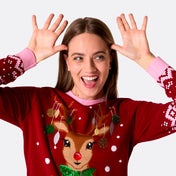
So split the job. Keep learning the fun way, with small starters that teach you something new each time. And for the matching-on-the-couch, everyone-in-the-photo moment, let a ready-made knitted sweater do the work while your skills catch up. Our cozy knitted Christmas sweaters come in the same designs for grown-ups and kids, so the whole family lines up without anyone holding a half-finished sleeve.
Then, when you are proud of a scarf you made with your own two hands, you will have both: the store-bought sweater that saved the holiday card, and the slow, satisfying craft you actually fell for. Knitting is a bit like learning a new language for your hands. Start small, keep at it, and the rest follows.
One last note for anyone worried their hands will not cooperate. If you have stiff or arthritic fingers, lightweight wood or bamboo needles are warmer and easier to hold than metal, and elastic wool blends are far more forgiving than stiff cotton, per guidance from the Arthritis Foundation. Knitting is for every pair of hands.
Did you know?
Knitting comes down to just four core skills: the slip knot, the cast on, the knit stitch, and the cast off.
A US size 8 (5mm) needle with worsted yarn is the standard starting setup recommended for most beginners.
Garter stitch means knitting every row; stockinette alternates a knit row with a purl row for the classic V fabric.
Wood and bamboo needles grip the yarn better than slippery metal, which helps prevent dropped stitches early on.
There are two main holds: English style (yarn in the right hand) and Continental (yarn in the left).
Frequently asked questions about Knitting for Beginners: 4 Skills & First Projects
Start with something small, flat, and forgiving so you finish it fast. A garter-stitch dishcloth or a simple scarf is ideal, since both use only the knit stitch with no shaping. A scarf takes longer but builds real muscle memory, and a dishcloth gives you a finished object in an evening.
The easiest project is anything rectangular worked entirely in garter stitch, which means knitting every row. A dishcloth, a scarf, or a chunky blanket all qualify. They skip purling and shaping completely, so you can focus on getting your knit stitch and tension comfortable first.
Neither is truly harder, they are just different. Knitting uses two needles and many live stitches at once, while crochet uses one hook and one active loop, which some find simpler to manage. Crochet works up faster but uses more yarn. Both feel awkward at first and easy once the basics click.
Only two things are essential: a pair of US size 8 (5mm) wood or bamboo needles and a ball of light-colored worsted or chunky yarn. Add small scissors and a blunt yarn needle to weave in the end. Cheap acrylic yarn is perfect for learning so mistakes never feel precious.
Most people learn the four core skills, the slip knot, cast on, knit stitch, and cast off, in a single afternoon. Your hands feel clumsy for the first hour, then muscle memory takes over. Within a weekend of practice you can finish a first scarf or dishcloth you are genuinely proud of.