Orthodox Christmas: Why January 7? Dates & Traditions
Orthodox Christmas is the celebration of the birth of Jesus Christ kept by Eastern Orthodox Christians, and most of them mark it on January 7 rather than December 25. In 2027 it falls on Thursday, January 7. The date looks different from the Western holiday for one simple reason: many Orthodox churches still follow the old Julian calendar, which now runs 13 days behind the Gregorian calendar the rest of the world uses. So while most of us are taking down the tree, millions of families are just sitting down to their Christmas feast.
It all comes down to two calendars. The Julian calendar, introduced by Julius Caesar back in 46 BC, slightly overestimated the length of the solar year, by about 11 minutes a year. Over many centuries those minutes added up, and the calendar drifted out of step with the seasons. In 1582 Pope Gregory XIII introduced the Gregorian calendar to correct the drift, and most of the Christian world eventually adopted it. Some believers kept the older calendar, and by 1923 the gap between the two had grown to 13 days. That is why Orthodox Christmas now lands 13 days after December 25, on January 7. In churches that follow the traditional Julian calendar, it is still December 25 on their own calendar, just a different day on ours.
Cozy picks for a long, candlelit evening
1Women's Red Christmas Cardigan – a soft, button-up layer that is easy to throw on for a late-night service and just as easy to keep on by the fire.
Not every Orthodox church keeps the same date, so the world splits into two groups. Churches in Russia, Ukraine, Serbia, Georgia, Montenegro, Belarus, Moldova, Ethiopia and Kazakhstan follow the older Julian calendar and celebrate on January 7. Churches in Greece, Bulgaria, Romania, and most Orthodox communities in the United States follow the Revised Julian calendar and celebrate alongside everyone else on December 25. A few churches, such as the Armenian Apostolic Church, observe the Nativity on January 6. It is worth knowing that the picture is shifting: in Ukraine a growing majority now celebrate on December 25, a change tied to moving away from the Russian Orthodox tradition.
Christmas crowd-pleaser
Kids' Rudolph Christmas Sweater
Whether it's gift-wrapping or gingerbread, Kids' Rudolph Christmas Sweater keeps you comfy through every holiday moment.
Orthodox Christmas is less about gift-giving and more about preparation. The season opens with the Nativity Fast, a 40-day stretch that begins on November 15, during which the faithful give up meat and dairy to ready themselves in body and spirit. The fast ends on Christmas Eve with a special meatless meal often called the Holy Supper, or Svyata Vechera in Slavic traditions. By custom the family waits to begin until the first star appears in the evening sky, a nod to the Star of Bethlehem that guided the wise men. The table is often set with 12 dishes, one for each of Christ's apostles.
Traditional Orthodox Christmas food
Because the Christmas Eve meal is still meatless, it leans on grains, vegetables and fruit. A centerpiece in Ukrainian and Russian homes is kutia, a sweet porridge of wheat berries, honey and poppy seeds that stands for family and a good harvest. Around it you might find borscht, mushroom soup, cabbage rolls, vegetable stew, slow-cooked beans, baked apples, dried fruit and nuts, and plenty of bread. On Christmas Day itself the fast is broken and the feasting begins in earnest, with roasted meats, sausages and rich pastries. In many Slavic homes a sheaf of wheat called a didukh is set in a place of honor, and straw is tucked under the tablecloth to recall the humble manger.
How to say Merry Christmas to an Orthodox friend
You can absolutely wish an Orthodox friend a Merry Christmas, and many will say it right back. The traditional greeting, though, is even nicer to use: one person says "Christ is Born!" and the other replies "Glorify Him!" In Slavic communities you will hear it as "Khristos Razhdayetsya" with the response "Slavite Yeho." If a household celebrates on January 7, sending your warm wishes that morning rather than in December will mean a lot.
Orthodox Christmas vs. Catholic and Protestant Christmas
The heart of the holiday is the same: all of them celebrate the birth of Jesus Christ. The biggest differences are the calendar and the mood. Western Christmas centers on December 25, gifts, and a festive build-up through Advent. Orthodox Christmas, for the churches on the old calendar, falls on January 7 and is quieter and more devotional, shaped by 40 days of fasting, long candlelit liturgies, and a family meal rather than a pile of presents. Orthodox communities also keep the 12 Days of Christmas running through to Theophany (also called Epiphany) on January 6, marking the baptism of Christ, when in some places the faithful walk in procession to bless rivers, lakes and the sea, breaking the ice to do so.
Bringing a little cozy into the season
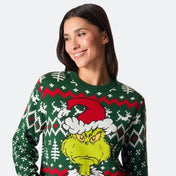
Whether you mark Christmas on December 25, January 7, or both, the spirit is the same: gathering close, eating well, and slowing down together. A soft, warm Christmas sweater is a lovely way to settle into a long evening of liturgy, a late Holy Supper, or simply a film on the couch while the candles burn. If you are after something gentle and festive to wear through the whole season, our Christmas sweaters have classic and playful styles for the whole family, and a matching set of Christmas pajamas is perfect for a slow January morning.
However you keep it, Orthodox Christmas is a beautiful reminder that the season does not end when the wrapping paper is cleared away. For many millions of people, the warmest part is still to come. To everyone marking the day on January 7: Christ is Born, glorify Him, and a very Merry Christmas to you and yours.
You can read more about the history and calendar behind the holiday on Wikipedia and in this explainer from the BBC.
Did you know?
Orthodox Christmas falls on January 7 because the Julian calendar now runs 13 days behind the Gregorian calendar.
The Nativity Fast lasts 40 days, starting on November 15, with no meat or dairy.
The Christmas Eve Holy Supper traditionally has 12 meatless dishes, one for each of Christ's apostles.
Families wait to start the meal until the first star appears, a nod to the Star of Bethlehem.
More than 12% of the world's Christians belong to Orthodox communities, according to the Pew Research Center.
Frequently asked questions about Orthodox Christmas: Why January 7? Dates & Traditions
Many Orthodox churches still follow the old Julian calendar, which now runs 13 days behind the Gregorian calendar most of the world uses. December 25 on the Julian calendar lands on January 7 on ours, so that is when they celebrate the birth of Christ.
Churches in Russia, Ukraine, Serbia, Georgia, Montenegro, Belarus, Moldova, Ethiopia and Kazakhstan celebrate on January 7. Greece, Bulgaria, Romania and most Orthodox communities in the United States follow the Revised Julian calendar and celebrate on December 25, while the Armenian Church marks it on January 6.
Yes, you can wish them a Merry Christmas. The traditional greeting is even warmer: one person says "Christ is Born!" and the other replies "Glorify Him!" If a household celebrates on January 7, sending your wishes that morning is a kind touch.
Both celebrate the birth of Jesus Christ. The main differences are the date and the mood: Orthodox churches on the old calendar celebrate on January 7 after a 40-day fast, with long candlelit liturgies and a meatless Holy Supper, rather than the December 25 gift-focused celebration of the Western church.
The Christmas Eve Holy Supper is meatless and often has 12 dishes for the 12 apostles, including kutia (sweet wheat-berry porridge with honey and poppy seeds), borscht, mushroom soup, cabbage rolls and bread. On Christmas Day the fast is broken with roasted meats, sausages and rich pastries.