The Christmas Pickle: Tradition, Myth & How to Play
The Christmas pickle is a German-American holiday tradition where a pickle-shaped glass ornament is hidden among the branches of the Christmas tree, and on Christmas morning the first person to spot it wins a little something extra, either a bonus gift or a year of good luck. It is one of the most charming and confusing customs of the season, partly because almost everyone calls it "German" and almost no one in Germany has ever heard of it. Here is what the Christmas pickle actually is, where the famous origin story falls apart, and how to play hide-the-pickle with your own family this year.
At its simplest, the Christmas pickle is a green, glass ornament shaped like a gherkin that blends in beautifully against the green needles of a decorated tree. Tradition says the pickle should be the very last ornament hung, tucked deep into the branches once everything else is in place. On Christmas morning the children race to find it, and whoever spots the hidden pickle first is rewarded. Some families hand over an extra present from Santa Claus, while others promise the finder a full year of good fortune. Either way, it turns trimming the tree into a game that the whole family can look forward to.
The ornament itself is usually blown glass, the same hand-made style of decoration that has hung on American trees since the late 1800s. Modern versions come in everything from tiny mini-pickles to oversized novelty gherkins, but the rule of the game never changes: hide it well, and let the youngest eyes do the hunting.
Match the whole family while you hunt for the pickle
Ask anyone where the Christmas pickle comes from and you will almost always hear the same answer: Germany. The custom is so often tied to a supposed old German word, Weihnachtsgurke ("Christmas cucumber"), that the German connection feels like settled fact. It is not. Historians have repeatedly debunked the idea, and the most telling evidence comes from Germany itself. When the polling firm YouGov surveyed 2,057 Germans, a remarkable 91% had never even heard of the legend. A tradition that genuine German families had practiced for generations would not be a mystery to nine out of ten Germans.
Merry and matching
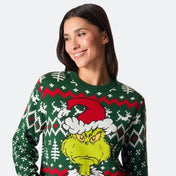
Women's Christmas Scenery Christmas Sweater
Nothing says merry quite like Women's Christmas Scenery Christmas Sweater, ready for cookie-baking and couch-lounging alike.
So where did it really come from? The most credible explanation is refreshingly down to earth. In the 1890s, the American store Woolworths began importing hand-blown glass ornaments from Germany, many of them shaped like fruits and vegetables. Pickle-shaped ornaments were apparently a hard sell, so, as the story goes, a salesman invented a cozy "old German custom" to move the unwanted stock. The legend sold the pickles, the pickles sold the legend, and a marketing tale quietly became a beloved family ritual. Glass-blown decorative vegetables were also imported from France from 1892 onward, which is why pinning the pickle on any single country is so hard.
For families who love to lean into the season, a set of matching family Christmas sweaters makes the pickle hunt feel even more like an event, with everyone dressed to match around the tree.
The other origin stories (and why they are doubtful)
Beyond the Woolworths theory, two far more dramatic legends get passed around every December. Both are charming, and both are almost certainly invented after the fact.
The first is a Civil War tale. A Bavarian-born soldier named John C. Lower, fighting for the Union, was captured and held at the notorious Camp Sumter (Andersonville) prison camp. Starving on Christmas Eve, he begged a guard for a single pickle. The guard took pity, the pickle is said to have given him the strength to survive, and after the war he supposedly began hiding a pickle on his family tree every year in gratitude. It is a moving story, but there is no solid evidence it ever happened.
The second legend is older and darker. It tells of Saint Nicholas rescuing two Spanish boys who had been trapped in a barrel of pickles by a wicked innkeeper. This actually echoes a gruesome medieval legend in which a cannibalistic butcher killed and barreled a group of boys, only for Saint Nicholas to miraculously bring them back to life. In the original tale the barrel held meat for pies, not pickles, which is a strong sign the "pickle" detail was added later to fit the ornament.
Berrien Springs, the Christmas Pickle Capital of the World
If any place can claim the pickle as its own, it is Berrien Springs, Michigan, a small town that proudly billed itself as the Christmas Pickle Capital of the World. From 1992, the town held a pickle parade led by the Grand Dill, complete with pickle-themed floats and festivities. The parade ran until 2005 and then went quiet, but the celebration was revived in 2021 after a 16-year hiatus, bringing the Pickle Festival back to life. It is a wonderfully American twist: a tradition with shaky German credentials found its truest home in a Michigan town that decided to lean all the way in.
How to play hide-the-pickle as a family
The best part of the Christmas pickle is that there are no official rules, so you can shape it around your own family. Here is a simple way to do it:
Decorate the tree first. Hang every other ornament, then save the pickle for last so it disappears into a fully trimmed tree.
Hide it after the kids are asleep. On Christmas Eve, tuck the pickle deep into the branches where its green glass blends with the needles.
Set the prize in advance. Pick one reward and stick to it, whether that is the first present to open, a small extra gift from Santa, or simply bragging rights and good luck for the year.
Send everyone hunting on Christmas morning. No touching, no peeking the night before, eyes only. The first to point it out wins.
Take a photo of the winner. Years later, the run of pickle-finders becomes its own little family record.
It is a five-minute ritual that turns a quiet Christmas morning into a burst of laughter, and it costs you nothing but one small ornament and a good hiding spot.
Whether you believe the Woolworths theory, the Civil War legend, or none of it at all, the Christmas pickle has earned its place on the tree. It is silly, it is a little bit of a fib, and it is exactly the kind of harmless, joyful ritual the holidays are made for. Pair it with cozy Christmas sweaters for the search party and snuggly Christmas pajamas for the morning reveal, hide that little green gherkin well, and let the hunt begin.
When YouGov polled 2,057 Germans, 91% had never heard of the Christmas pickle.
Woolworths began importing German glass fruit and vegetable ornaments to the US in the 1890s.
Glass-blown decorative vegetables were also imported from France from 1892 onward.
Berrien Springs, Michigan calls itself the Christmas Pickle Capital of the World.
Berrien Springs held a pickle parade from 1992 to 2005, revived in 2021 after a 16-year break.
Frequently asked questions about The Christmas Pickle: Tradition, Myth & How to Play
Not really. Although it is almost always called German, the custom is German-American and was popularized in the United States in the late 1800s. When YouGov polled 2,057 Germans, 91% had never heard of the legend, so a genuine old German tradition it is not.
The first person to find the hidden pickle on Christmas morning traditionally wins an extra present from Santa, or is promised a year of good luck and fortune. Each family sets its own reward, so you can decide what the winner gets.
Hang the pickle ornament last, tucked deep into the branches where its green glass blends with the needles, usually after the kids are asleep on Christmas Eve. On Christmas morning everyone hunts, and the first to spot it wins the agreed prize.
It is a fun game that turns Christmas morning into a friendly hunt for the whole family. The hidden pickle adds a moment of suspense and laughter, and the lucky finder earns a small reward or good fortune for the coming year.
Christmas pickle ornaments are typically hand-blown glass shaped like a gherkin, the same style of glass decoration imported from Germany since the 1890s. Today they range from tiny mini-pickles to oversized novelty versions.