Yule Goat: The Norse Christmas Tradition Explained
The Yule goat is one of the oldest Christmas symbols in the Nordic world, a straw goat tied with red ribbon that traces all the way back to Norse mythology and the thunder god Thor. Long before Santa Claus arrived, this horned figure was the one who brought gifts on the darkest nights of the year. Today you will find little straw Yule goats tucked under Christmas trees across Sweden, Norway and Finland, and one very large, very flammable version that has become a holiday legend all its own. Here is where the Yule goat came from, what it means, and why a whole town keeps building a giant one every December.
The Yule goat, known as the Julbock in Sweden, julebukk in Norway and joulupukki in Finland, is a Scandinavian Christmas symbol with roots in pre-Christian winter festivals. In its modern form it is a small ornament made of straw and bound with red ribbon, but the tradition is far older than the decoration. Across more than a thousand years it has been a harvest spirit, a frightening visitor demanding gifts, a costume worn door to door, and finally the gentle gift-bringer who came before Santa Claus took over the role.
Nordic Christmas picks the Yule goat would approve of
If the word joulupukki looks familiar, that is no accident. In Finland the name for Santa Claus still literally means "Yule goat," a living reminder that the goat and the gift-giver were once the very same character.
The Norse origins: Thor and his two goats
The most popular theory ties the Yule goat to the Norse god Thor, who rode across the sky in a chariot pulled by two magical goats named Tanngrisnir and Tanngnjostr, which translate roughly to "teeth-barer" and "teeth-grinder." In the old myths these goats were extraordinary: Thor could slaughter them for a feast in the evening, and as long as the bones were kept whole, they would rise again alive the next morning. A creature linked to abundance, renewal and the turning of the seasons was a natural fit for a midwinter festival.
Straight from the workshop
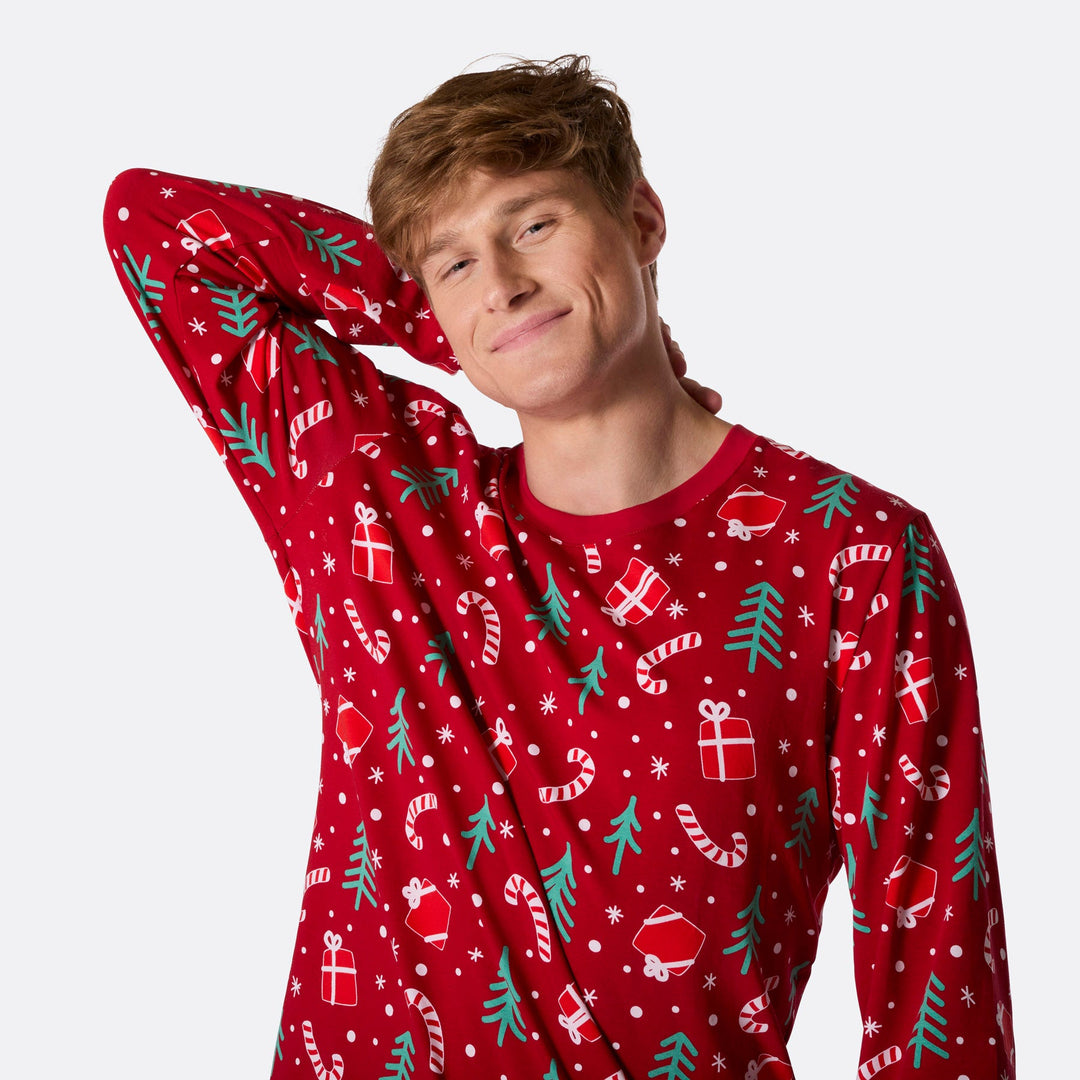
Women's Classic Christmas Sweater
Bring on the twinkly lights and hot cocoa, because Women's Classic Christmas Sweater is built for the season.
There is a farming root too. In old Norse communities the last sheaf of grain from the harvest was believed to hold special power, the spirit of the harvest itself, and it was saved for the Yule celebrations. This bundle was sometimes called the Yule goat, which is part of why the traditional ornament is still made of straw to this day. The goat connected the work of the fields with the feasting of the holiday.
From scary spirit to gift-bringer
For centuries the Yule goat was not cuddly at all. In Sweden people imagined it as an invisible spirit that appeared before Christmas to check that the holiday preparations were being done properly. Written records of the goat as an established Yule custom reach back to the 1500s and 1600s. The Danish theologian Peder Palladius wrote about it sometime between 1537 and 1560, noting that the Yule goat had even been banned along with other rowdy nighttime drinking customs.
If all this Nordic folklore has you in the mood to celebrate the old-fashioned way, our full Christmas sweater collection is full of cozy knits to wear while you set up your own little straw goat.
In a tradition similar to English wassailing, young men in costume would go house to house around Christmas singing songs, putting on little plays and pulling pranks. The Yule goat was often part of this band of characters, a loud and sometimes scary creature that demanded gifts and treats. A popular Swedish prank was to secretly hide a straw Yule goat in a neighbor's home, and the family that got "stuck" with it had to sneak it into someone else's house in turn.
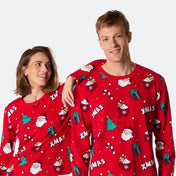
Everything changed in the 1800s. Across Scandinavia the Yule goat slowly turned into the friendly bringer of presents, with a man in the family dressing up as the goat to hand out gifts on Christmas night. Then, in the second half of the 19th century, the goat was gradually replaced by the jultomte or julenisse, the figure we now recognize as Father Christmas. The goat handed over its sack, so to speak, and the modern Santa Claus stepped in. That ribbon of history is why a Nordic Christmas still feels a little different from an American one, something you can lean into with a cozy Scandinavian-style Christmas sweater or a set of matching holiday pajamas.
Julebukking: the Yule goat goes door to door
The costume tradition never fully disappeared. In Norway and in Norwegian-American communities it lives on as julebukking, practiced during romjul, the quiet stretch of days between Christmas and New Year. People dress up in masks and disguises and go from house to house, and the neighbors who answer the door try to guess who is hiding behind each costume. In some versions the visitors sing carols and are rewarded with candy and treats, and at least one person from the household has to join the group and carry on to the next door. If it sounds a lot like Halloween trick-or-treating, that is exactly the comparison Scandinavians themselves make.
The Gavle goat: a giant straw goat that keeps getting burned
The most famous Yule goat in the world stands in the Swedish town of Gavle. In 1966 the town built a giant version of the straw ornament for its town square, a thirteen-meter goat that has since earned a place in the record books for its size. It also started one of the strangest holiday traditions anywhere. Almost every year, someone tries to burn the Gavle goat down.
The very first goat made it to New Year's Eve in 1966 before going up in flames, and many of its successors have not lasted nearly as long. Over the decades the goat has been destroyed dozens of times, despite guards, fences, security cameras and coatings of flame-retardant chemicals. The attacks have become legendary in their own right: in 2001 an American visitor was jailed after setting it alight, later saying he thought burning the goat was allowed. In 2005 arsonists dressed as Santa and a gingerbread man reportedly shot flaming arrows into it. In 2010 a guard turned down a bribe from people who wanted to airlift the goat away by helicopter. Each December, locals and onlookers around the world now place friendly bets on whether the goat will survive to Christmas.
Yule goat or Krampus?
The Yule goat is sometimes confused with Krampus, the horned, devilish figure from Alpine folklore who punishes badly behaved children. They are not the same. Krampus comes from the mountains of Austria and Bavaria and is a companion to Saint Nicholas, while the Yule goat is a Scandinavian harvest and gift-giving figure with no real punishing role. The overlap is mostly visual: both have horns, and both reach back to pre-Christian midwinter customs. But the Yule goat's story is one of gifts and abundance, not fear.
How to bring the Yule goat into your own home
You do not need to be Swedish to enjoy the tradition. The classic way is a small straw goat ornament, sold across Scandinavia each December, placed under or hanging on the Christmas tree. Many families set out the goat at the start of Advent and let it watch over the season the way the old harvest spirit was once believed to. Pair it with red ribbon, candles and a warm Nordic knit, and you have a quietly meaningful nod to one of the oldest Christmas characters in the world. Whether you go all in on Scandinavian decor or simply pull on a festive sweater, the Yule goat is a lovely reminder that Santa Claus had a horned, straw-bodied predecessor.
In Finland, Santa Claus is still called Joulupukki, which literally means Yule goat.
The Yule goat traces back to the Norse god Thor, whose chariot was pulled by two goats, Tanngrisnir and Tanngnjostr.
The traditional ornament is woven from straw because the last sheaf of the harvest was saved for Yule.
Gavle, Sweden has built a giant straw Yule goat every year since 1966, and arsonists have burned it down dozens of times.
The very first Gavle goat, in 1966, survived until New Year's Eve before it was set on fire.
Frequently asked questions about Yule Goat: The Norse Christmas Tradition Explained
The Yule goat is an ancient Scandinavian Christmas symbol tied to Norse mythology and the god Thor, whose chariot was pulled by two goats. It represented the harvest spirit and, for centuries, was the gift-bringer at Christmas before Santa Claus took over that role in the 1800s.
The traditional Yule goat is made of straw bound with red ribbon. The straw comes from an old belief that the last sheaf of grain from the harvest held magical power and was saved for the Yule celebrations, which is why the ornament is still woven from straw today.
Not as a rule. The straw Yule goat ornament is meant to decorate the Christmas tree, not to be burned. The burning is a separate, unofficial tradition aimed at the giant Gavle goat in Sweden, which arsonists have destroyed dozens of times since 1966 despite guards and flame-retardant coatings.
No. Krampus is a horned figure from Alpine folklore in Austria and Bavaria who punishes badly behaved children alongside Saint Nicholas. The Yule goat is a Scandinavian harvest and gift-giving symbol. They share horns and pre-Christian roots, but the Yule goat brings gifts rather than punishment.
In Finland the word for Santa Claus, joulupukki, literally means Yule goat. It is a leftover from the centuries when the goat itself was the gift-bringer. When the figure shifted toward the modern Santa, the old name simply stayed attached to the new character.